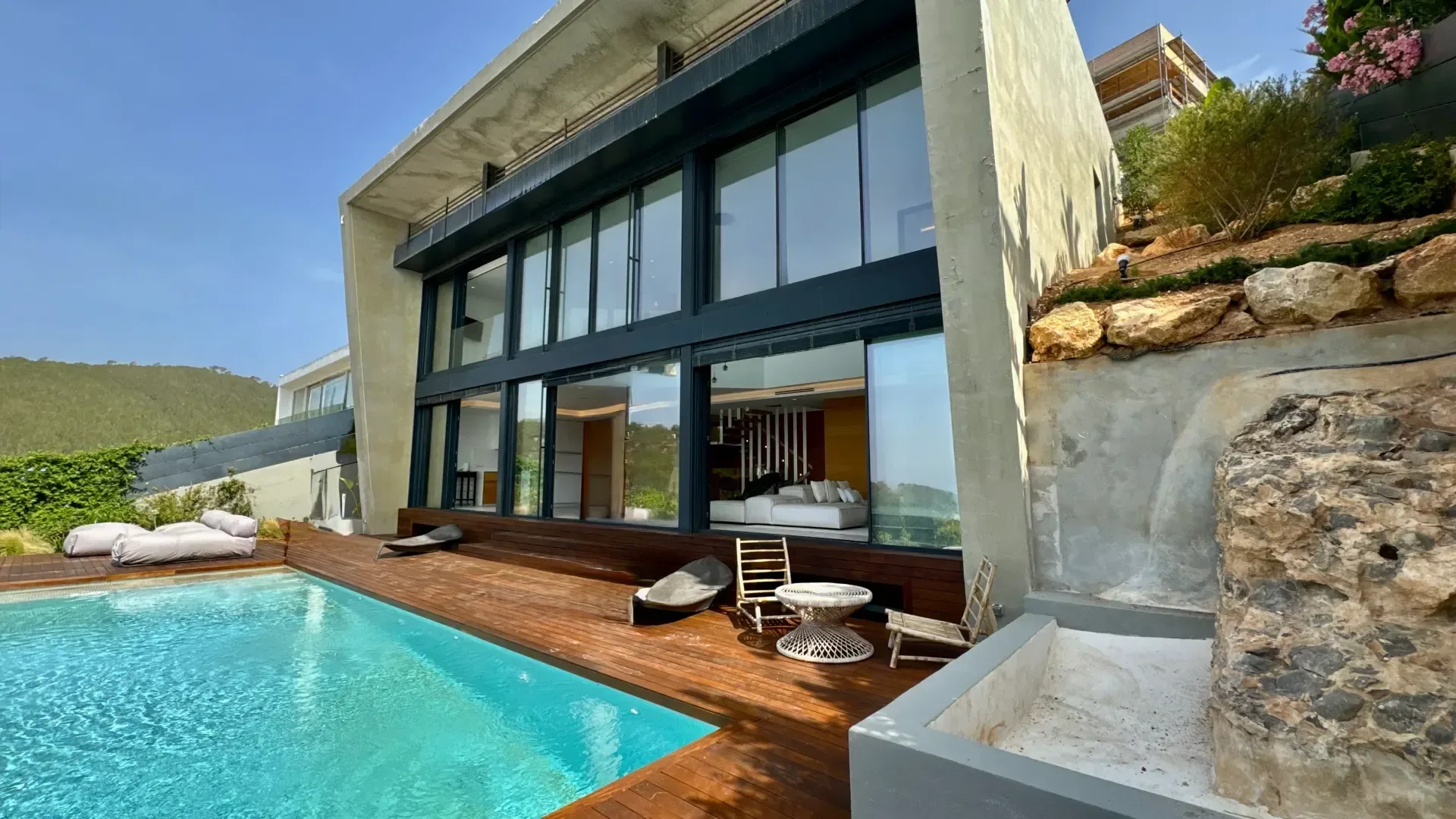
Buying a house to renovate in Ibiza: what you should know
How to tell whether an old house is worth it before you buy, which overruns always appear once it is opened up, and when renovating beats building new.
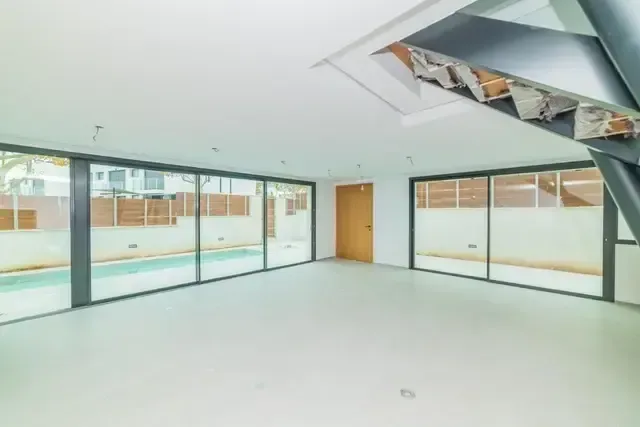
Buying to renovate in Ibiza can be the best possible decision or a bottomless pit, and what separates the two can be assessed reasonably well before signing.
These are the checks we make when a client asks us to go with them to see a house they are thinking of buying.
First: the planning question
Before looking at the condition of the house, look at its paperwork. On the island this matters more than almost anywhere else.
Is all of the construction legal? It is very common to find houses with extensions, enclosed porches, pools or outbuildings built without permission. There may be volume that is not on record, and that volume may be out of planning conformity, time-barred, or outright at risk. The difference between those three states is the difference between renovating normally, renovating with limitations, or having to demolish.
Ask for the Land Registry extract, the cadastral reference and the habitability certificate. And compare the areas from the three sources with what you can see. If they do not match, there is something to clarify before buying, not after.
What do the planning rules let you do? An existing house on rural land may have a volume that could not be built new today. That is a very valuable asset: renovating lets you keep it. But there may also be significant limits on what can be extended, on whether the structure can be touched, or on the treatment of façades if it is listed.
If the house has any degree of heritage protection, the renovation becomes a different project: elements have to be respected, compatible materials used, and longer processing times allowed for.
Second: the four things that decide the budget
Everything else is finishes, and finishes are predictable. What throws out a renovation budget is almost always on this list:
Structure
This is the big risk. Timber floors with beam ends rotted by damp, concrete slabs with corroded reinforcement — the typical problem near the sea — walls with settlement or active cracking.
A structural report before buying costs little. If the seller will not allow any opening up, that in itself is a signal.
Roof and waterproofing
The traditional flat roof of the island is not waterproofed with a modern membrane. If it has never been refurbished, expect it to be rebuilt entirely: stripping, making good, insulating, waterproofing and finishing again. It is a large item and it is not optional.
Building services
In a house more than thirty years old, the electrical installation will be outside current regulations and the plumbing is probably in materials no longer used. Everything gets replaced, and replacing it means opening up partitions, chasing and closing again: far more expensive than installing in a new build.
Add drainage. If the house discharges to an old cesspit without an adequate infiltration system, that has to be resolved.
Damp
Distinguish the type, because the cost is very different:
- Penetrating damp from roof or façade: it is located and resolved.
- Condensation from lack of insulation and ventilation: resolved with work on the envelope.
- Rising damp from the ground, which in old houses with no barrier is the most common: it is the most laborious, requires perimeter drainage or a chemical barrier, and is not fixed with paint.
And a warning: if an old house has been painted with plastic paint, there is a high probability the wall is in worse condition than it looks. Plastic paint waterproofs the wall from the outside and traps moisture inside.
Third: working out whether it adds up
The full sum is:
Purchase price + purchase taxes + renovation + professional fees + permit + VAT + furniture
And that is compared with the market value of an equivalent, already-renovated house in that area. If the result leaves no margin, the deal only makes sense if what you are buying is irreplaceable: the location, the views, the volume or the plot.
As an order of magnitude, a full renovation with new services, roof and layout runs on the island from around €1,200-1,800 per m², and can rise considerably with high-end finishes or structural work. If the structure and roof both have to be dealt with completely, the cost can approach that of a new build — with more uncertainty, because in a new build there are no surprises when you open up.
When renovating beats building new
Renovate if: the house has a volume or a location you could not obtain today, the structure is sound, you want shorter timescales — a renovation without a change of volume can be processed far faster than a new build — or the character of the old building is part of what you are after.
Build new if: the structure is compromised, the layout cannot accommodate what you need without demolishing almost everything, you want a high energy standard — much easier to achieve from scratch — or the existing house contributes nothing that offsets the cost of rehabilitating it.
What we do
We go with you to see the house before the purchase. We walk through, look at the roof, hunt for damp where it usually hides, check whether what is built matches what is on record, and give a renovation range with its unknowns flagged.
It is not a quote: it is an opinion with a builder’s judgement behind it, and it serves either to negotiate the purchase price or to rule the house out. We do it free of charge because, honestly, we would rather tell you not to buy a house than get into a renovation that is going to go badly for both of us.
Frequently asked questions
Can I extend an existing house on rural land? It depends on the land category, the municipality and the plot area. There are situations where a limited extension is permitted and others where nothing is. It has to be checked case by case before buying.
How long does a full renovation take? 6 to 12 months of construction for a house, plus the prior paperwork. If there is no change of volume or use, the permit is usually faster than for a new build.
Can I live in the house during the renovation? In a full renovation, no. In phases, sometimes, but it works out more expensive and slower: you have to protect, clean and set up again for each phase.
Are you looking at a house to renovate? Get in touch before you sign. Going to see it with you is the easy part of our job.
full renovationrefurbishmentpurchaseinvestment
Keep reading
Building a villa in Ibiza: from the first idea to the keys
The six stages of a build told without decoration: what is decided in each one, how long they last, and when to involve whom.
Read
How much does it cost to build a house in Ibiza
What really drives the price of building on the island, why it costs more than on the mainland, and how to read a construction quote without nasty surprises.
Read
How to protect a house from the Ibiza summer heat
Ten design and construction decisions that keep a house cool in August without relying on air conditioning, from cheapest to most costly.
Read