Why Ibiza has one of the Mediterranean's most remarkable architectures
The traditional Ibizan house influenced European modernism before Ibiza was a destination: an architecture without architects that was already modern.
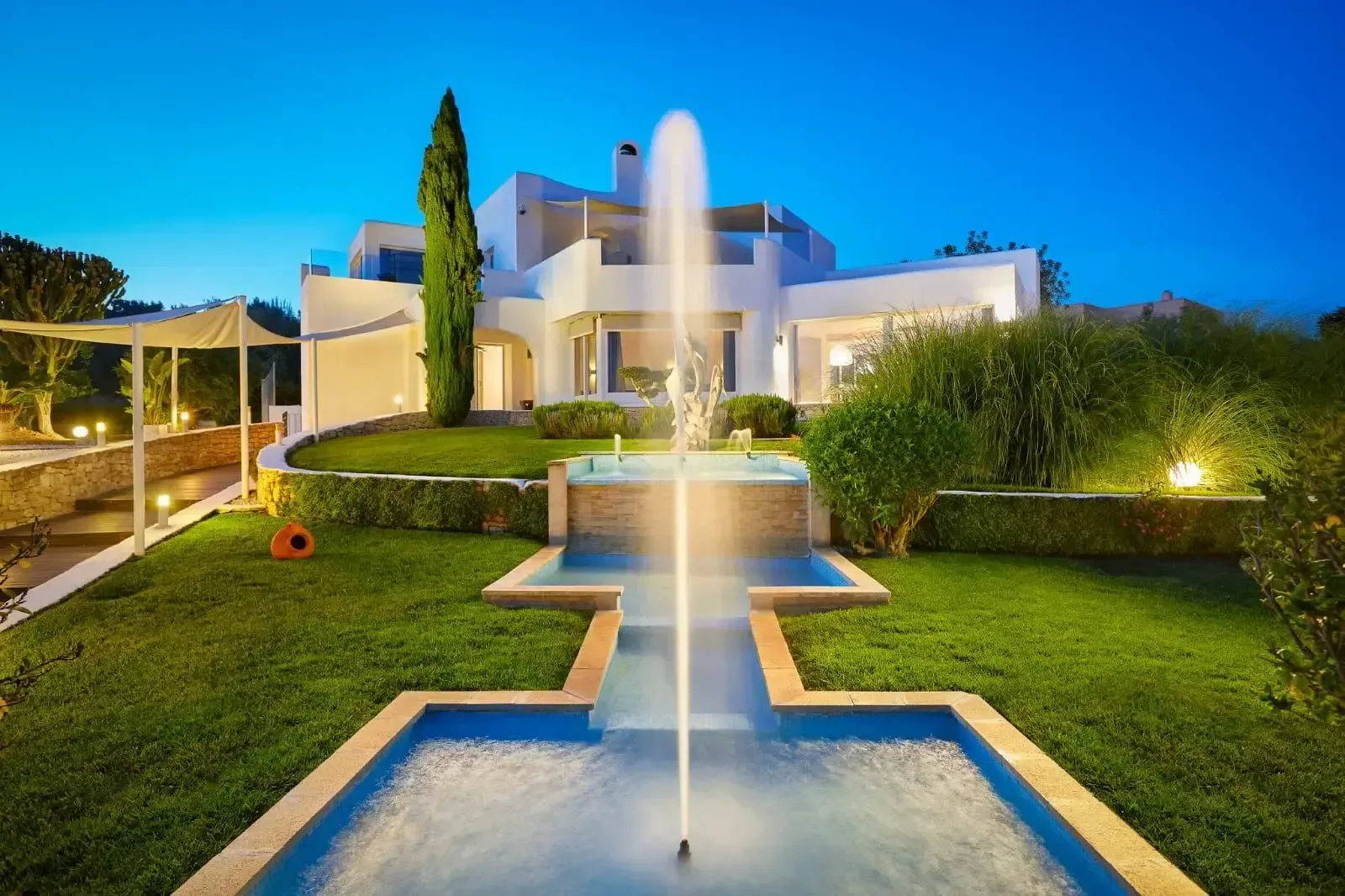
In 1933 the German architect Erwin Broner arrived in Ibiza and stayed. In the 1950s and 1960s others came: Josep Lluís Sert, Raoul Hausmann, Rolph Blakstad. They were not coming for the beaches — there was no tourism then — but to study the farmers’ houses.
What they found was disconcerting: an anonymous architecture, built without drawings by country people who had never heard of Le Corbusier, and which nevertheless satisfied almost everything the modern movement was proclaiming as revolutionary.
A modern architecture made without knowing it
The traditional Ibizan farmhouse is a set of white prisms with flat roofs, added one to another. It has no principal façade, no symmetry, no ornament. The openings are where they are needed and the size they need to be. The volumes grow by aggregation: when the family grew, another cube was added.
That is, point for point, the vocabulary of rationalism: pure volume, flat roof, absence of decoration, a plan that follows function, organic growth. The architects of the European avant-garde were drawing in the 1920s what Ibiza had been building for centuries.
The difference is the motive. The modern movement arrived at the white cube by intellectual conviction. Ibiza arrived at the white cube because it was the most efficient way of resolving a house with the means, the climate and the materials available.
The logic underneath
Everything in the traditional house answers a practical question:
How do you avoid the heat? Thick stone walls that delay the entry of heat by many hours. White lime wash that reflects radiation. Small openings on exposed faces. A porch — the porxo — that creates deep shade in front of the door and works as a summer room.
How do you make use of water? Flat roofs pitched slightly towards a cistern. On an island with no rivers, every square metre of roof is a collector.
How do you build with what is there? Stone from the clearing itself, lime from local kilns, sabina and pine, cane, dried seagrass from the beach as insulation. Supply radius: one kilometre.
How do you defend yourself? The defence towers against Barbary piracy, incorporated into some houses, explain walls thicker and openings smaller than the climate strictly required.
None of those decisions is aesthetic. All of them together produce something of extraordinary beauty. It is the most useful lesson we have learnt working here: when every construction decision is well resolved, the form comes out right almost by itself.
What still holds today
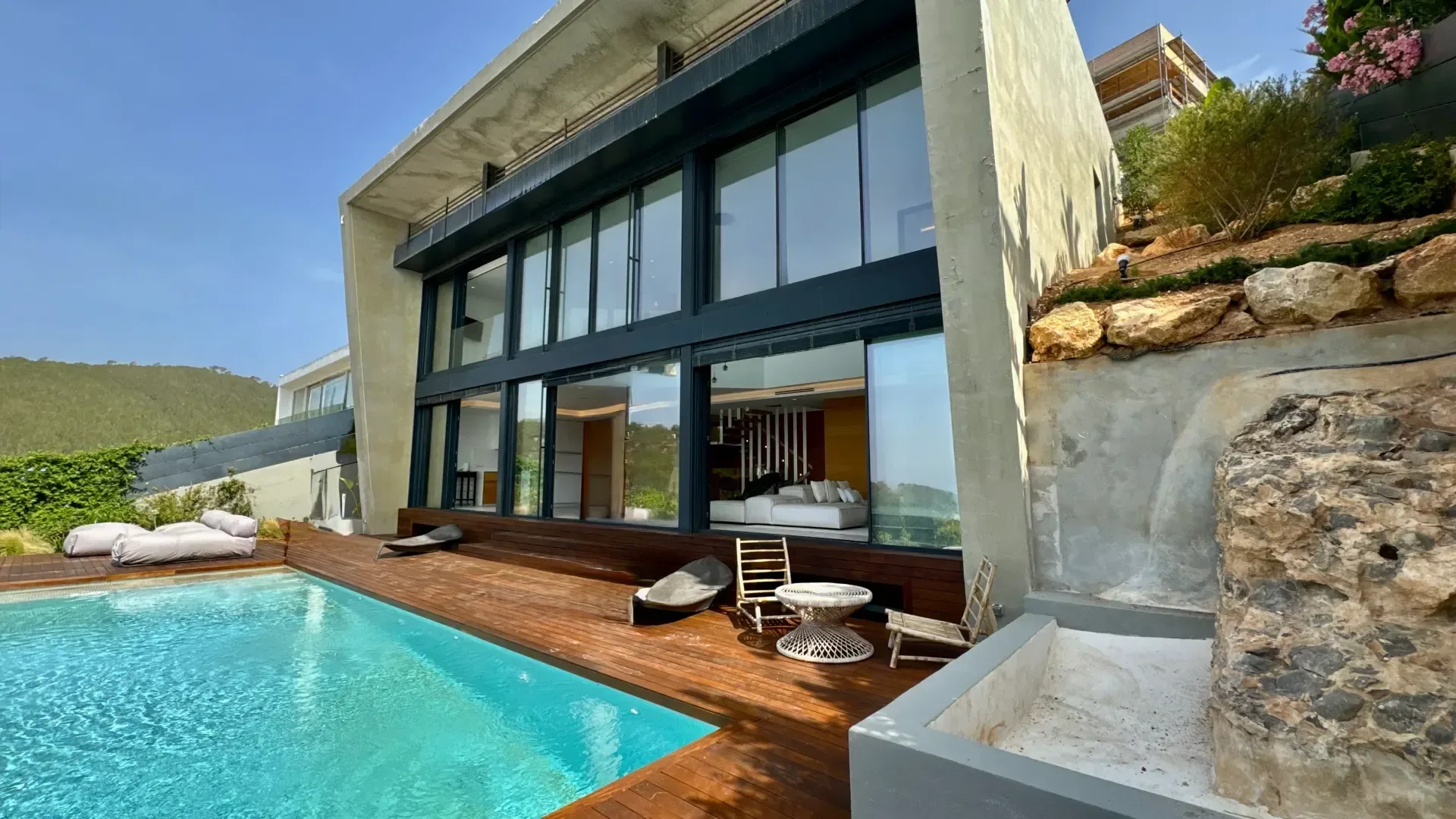
We build contemporary houses: concrete, steel, large areas of glass, complex services. We do not make replicas of traditional farmhouses, and we believe doing so would be pastiche.
But the principles hold intact:
- Shade is built. Today with cantilevers and screens rather than porches, but it is the same device: the solar protection comes from the architecture and not from an awning added afterwards.
- Mass matters. A well-insulated concrete slab does the job the half-metre wall used to do.
- The courtyard works. An internal courtyard provides its own shade, generates convection and allows ventilation without exposure. It is one of the best decisions available in a Mediterranean house, and we use it whenever the plot allows.
- Orientation is free. Protected south, controlled west, cross-ventilation. It costs not a euro more and it decides how the house is lived in August.
- Few materials, well placed. The traditional house uses three. The good contemporary houses on the island do too.
Why the island still attracts good architecture
Ibiza has a combination that is hard to find: a very intense, very clean light; a landscape of pine and rock that reaches the sea; a built heritage that provides an extremely clear formal reference; and planning rules which — for all how strict they feel when you are the one applying for a permit — have prevented the island from being built out the way other parts of the Mediterranean coast have.
That combination is why architecture studios from all over Europe still want to do a house here. And it is also why building here is a particular trade: the same materials, the same details and the same lead times that work on the continent do not work the same way on an island with salt in the air and a boat in between.
If you are thinking of building in Ibiza and want to work with someone who understands both the design and the island, let’s talk about your project.
vernacular architecturehistoryheritagedesign
Keep reading
Building a villa in Ibiza: from the first idea to the keys
The six stages of a build told without decoration: what is decided in each one, how long they last, and when to involve whom.
Read
Buying a house to renovate in Ibiza: what you should know
How to tell whether an old house is worth it before you buy, which overruns always appear once it is opened up, and when renovating beats building new.
Read
How much does it cost to build a house in Ibiza
What really drives the price of building on the island, why it costs more than on the mainland, and how to read a construction quote without nasty surprises.
Read